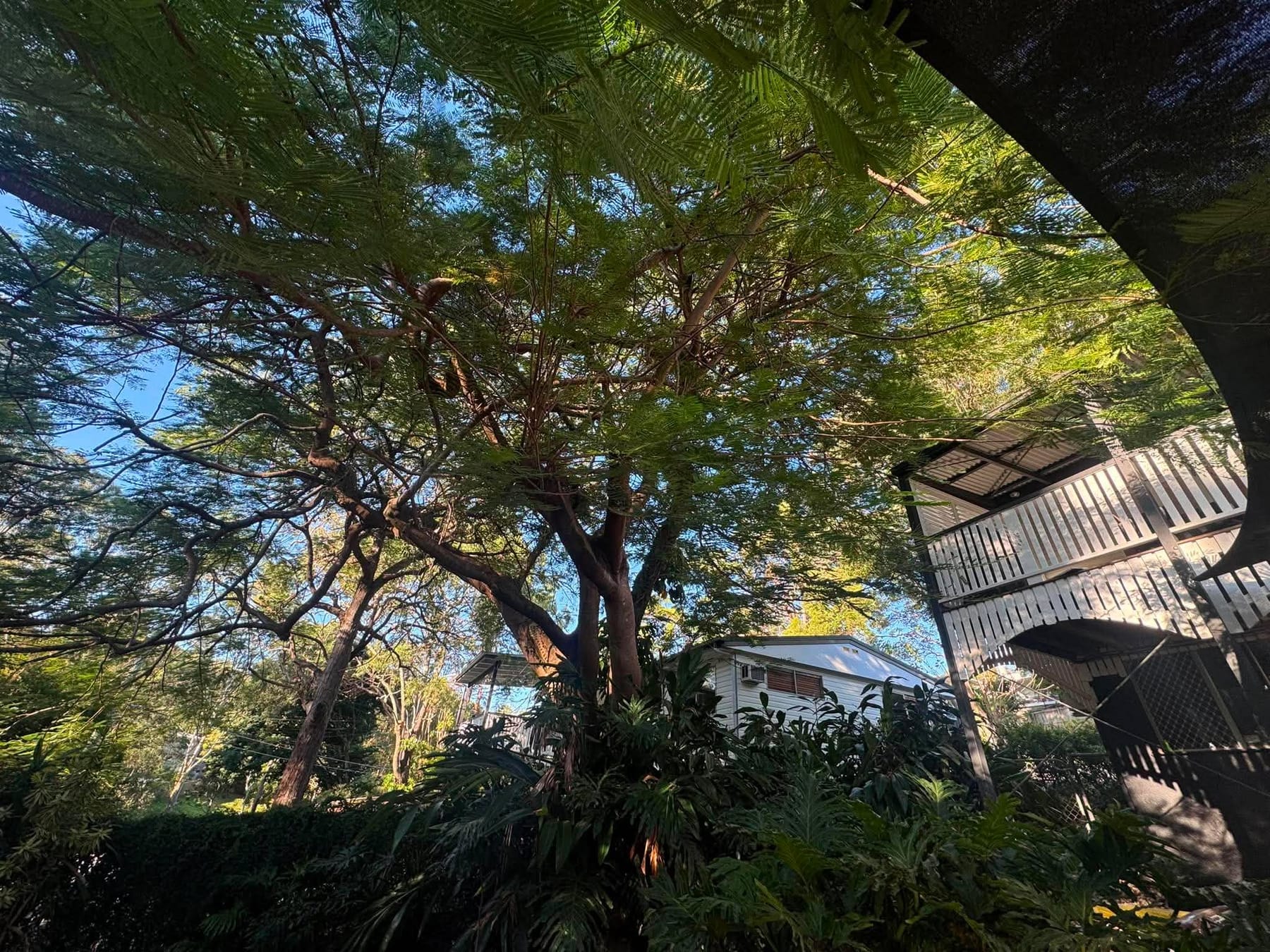
We get this call most weeks. Someone has a gum leaning over the back patio, or a camphor laurel dropping limbs on the kids' trampoline, and they want it gone. Fair enough. The first question we ask is not about the tree. It is about the block. In Brisbane, whether you can legally remove a tree has very little to do with how annoying it is, and a lot to do with where it stands and what protections sit over your land.
Here is the honest version, in plain terms. This is general information to help you ask the right questions. It is not legal advice, and every property is different, so check your own block before anyone starts cutting.
The two sets of rules that matter
Brisbane City Council controls vegetation through two main instruments, and a tree can be caught by either.
The first is the Natural Assets Local Law 2003, usually shortened to NALL. This protects "protected vegetation" across the city. That covers trees in bushland, wetlands and waterway corridors, plus significant native and significant urban vegetation on private land. Council can also place a Vegetation Protection Order (VPO) over a specific tree or stand of trees on private property. If a VPO applies, that tree is protected and you need permission before you work on it.
The second is City Plan 2014, Council's planning scheme. It carries overlays such as the biodiversity areas overlay and the significant landscape tree overlay. If your property falls inside one of these, removing or even heavily pruning a tree can trigger an approval requirement on top of the local law.
So a tree might be protected because of what it is, because of a VPO, or because of an overlay sitting over your land. Sometimes more than one applies at once.
When you probably do NOT need a permit
Plenty of ordinary backyard trees are not protected, and you can deal with them without involving Council. As a rough guide, a tree is more likely to be fair game if:
- It sits on a standard residential block with no VPO and no relevant City Plan overlay.
- It is a common garden or exotic species, not significant native or significant urban vegetation.
- It is not on Council land, a verge, or a neighbour's property.
The catch is that "probably" is doing real work in that sentence. The only way to know is to check, which we get to below.
When you DO need approval
You need a permit before you remove or work on a tree if it is protected under the NALL, if it is covered by a Vegetation Protection Order, or if it sits inside a City Plan overlay that regulates vegetation. Mature natives, trees in or near waterway corridors, and anything flagged as a significant landscape tree are common triggers on Northside blocks around Chermside, Aspley, Stafford and out toward the bushier suburbs.
The permits themselves are free to apply for. Council offers short-term permits for one-off jobs like removing or pruning a tree, longer-term permits for ongoing maintenance, and separate permission for minor work on Council street trees. Free does not mean automatic, though. Council assesses the application, and it can say no.
How to check your own property
Do not guess, and do not take a neighbour's word for it. Two reliable ways to check:
- Use Council's City Plan online mapping tool on the Brisbane City Council website. Enter your address and look at the overlays, including the biodiversity and significant landscape tree layers, plus any Vegetation Protection Order on the property.
- Phone Council directly on 07 3403 8888 and ask them to confirm what applies to your address. They deal with this all day.
Five minutes on the mapping tool can save you a fine with five figures in it.
The dead and dangerous tree exemption
There is a narrow exemption for trees that are genuinely dead, or that pose an immediate and serious threat to people or property. This is the one people lean on after a storm. It is real, but it is tighter than most expect.
"Immediate and significant threat" means exactly that. A tree you do not like the look of, or one that drops leaves in your gutters, does not qualify. And the burden of proof sits with you. Council can ask you to show the tree met the exemption, and for a protected or significant tree that often means photos of the structural problem and, in some cases, a report from an AQF Level 5 arborist. Take the photos and keep them before the tree comes down, not after, because once it is mulched there is nothing left to assess.
Storm season here runs roughly November to March, and that is when the genuinely dangerous calls spike. Even then, if there is any doubt about whether a tree is protected, a quick call to Council first is cheaper than the alternative.
The penalties are not small
Removing or damaging protected vegetation without permission is an offence, and Council enforces it. Penalties range from on-the-spot infringement notices through to prosecution, and serious cases reach into the tens of thousands of dollars. On top of the fine, Council can order replacement planting and restoration. It is not worth the gamble on a tree you could have had assessed for free.
Not sure? Ask before you cut
If you are unsure whether your tree is protected, check the mapping tool or ring Council first. And if you would rather have someone look at it in person, give Ozzy's a call on 0451 308 349 for a free quote or a straight answer. We work across Brisbane's Northside, we know which trees raise questions, and we would always rather sort the paperwork than see a customer cop a fine.
Want a hand from a local crew?
We give free, no-obligation quotes across Brisbane's Northside, and we're happy to take a look before you decide anything.