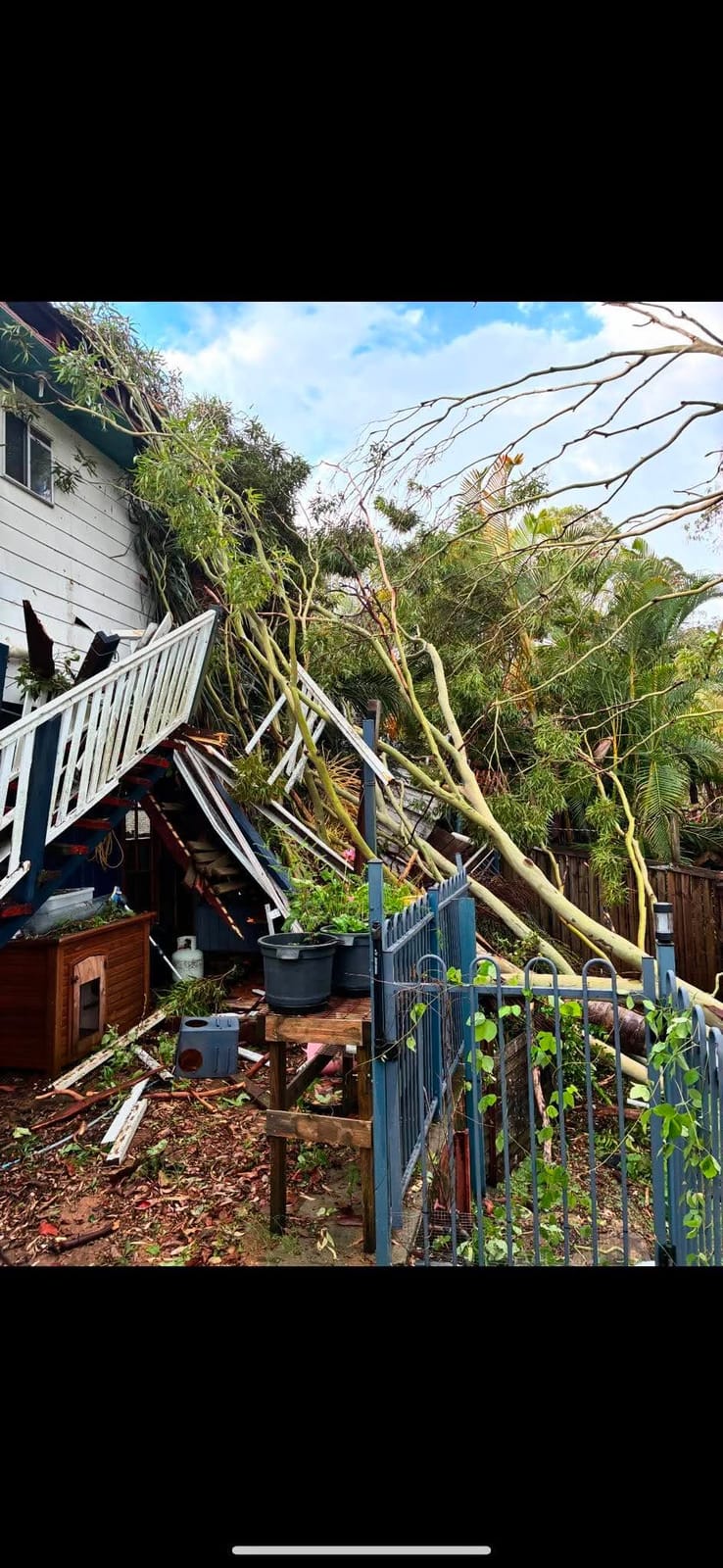
The first big southerly of the season rolls through about 4pm, the sky goes that bruised green colour, and within twenty minutes a limb is on the roof and the power is out. We see it every summer across the Northside. The frustrating part is how much of that damage was avoidable. A tree that drops a branch in a storm has usually been telling you for months that the branch was dodgy. Most people just never looked up.
South East Queensland cops more storms than almost anywhere in the country, and the season runs roughly November through to March, with the odd early one in October. The work you want done is the work you do before the clouds build, not during. Here is what to check and when to get someone in.
Walk your yard and actually look up
Pick a calm afternoon, stand back from each tree, and look at the whole canopy. You are not after perfection, you are after the things that fail under load. Here is what we look for first.
- Deadwood. Bare grey branches with no leaves, especially up high. Dead limbs are brittle and they are the first thing to come down in wind. A gum can hold dead wood for a long time before it lets go.
- Overhanging and rubbing limbs. Anything sitting over the roof, the carport, the pool, or the neighbour's fence. Branches that cross and rub each other wear a wound open over time, and that weak point is where they snap.
- Cracks and weak V-forks. Where two stems grow up in a tight V with bark squeezed between them, that join is weak. Under storm load it can split right down the trunk. A visible crack at a fork is a serious warning.
- Leaning trees. A tree that has always leaned the same way is usually fine. A new lean, or fresh cracked soil and lifting roots on one side, means the root plate is moving. That one needs a look sooner rather than later.
- Lifting roots and soft ground. Roots heaving up out of the lawn, or boggy ground around the base after rain, both reduce how well the tree is anchored.
- Vines. Heavy vine growth adds weight and acts like a sail in the wind. It also hides what is going on with the branches underneath.
Palms get their own check. Old fronds and heavy seed pods come down hard and fast in wind, and a tall palm hanging over an entertaining area is worth cleaning up before summer.
Why pruning and deadwooding before the season works
A storm does not test your whole tree evenly. It finds the weakest part and pulls on it. Take the dead and damaged wood out beforehand and you have removed most of the easy failures. Thinning the canopy a little also lets wind pass through instead of pushing against a solid wall of leaves, which lowers the load on the trunk and the roots.
Good pruning is not topping a tree or hacking it back to stumps. That just triggers a mess of weak regrowth that is more dangerous in a year or two. Proper work follows the Australian Standard for pruning amenity trees, AS 4373, which means clean cuts in the right spots that the tree can actually seal over. Done right, the tree is safer and still looks like a tree.
Check the council rules before you cut
This catches people out. In Brisbane, some trees are protected under the Council's Natural Assets Local Law 2003, and you can need a permit to prune or remove them even when they are on your own property. There are also Vegetation Protection Orders on specific trees. Cutting a protected tree without permission can bring a fine.
The good news is the permits are free to apply for. If you are not sure whether a tree is protected, you can check with Brisbane City Council on 07 3403 8888 before any work starts. A decent tree company will know the local rules and can point you the right way.
What to do with a damaged tree after a storm
Once the weather has passed and it is safe to go outside, have a careful look. Some damage is cosmetic and the tree will be fine. Some of it is not, and the danger does not always end when the wind stops.
Watch for hung-up branches caught in the canopy, partly split limbs still attached, and a trunk that has cracked or shifted. A branch hanging by a strip of bark can drop hours later with no warning. Keep people and cars out from underneath until it is dealt with.
The one rule that matters most
Never go near fallen powerlines. Not to move a branch, not to take a photo, not for anything. Treat every downed line as live, because it very well might be, and lines can hide under fallen leaves and timber. Stay back at least 10 metres, keep kids and pets away, and call Energex on 13 19 62, or 000 if anyone is hurt or there is immediate danger. A tree is replaceable. Wait for someone trained to deal with it.
When to get a professional in
Plenty of light tidy-up work is fine to do yourself from the ground. The line we draw is height, weight, and powerlines. Call someone in when you are looking at any of these.
- Work that needs a ladder, a chainsaw above shoulder height, or climbing into the tree.
- Anything over or near powerlines, the house, or a shared fence.
- A large limb under tension, hung up in the canopy, or partly split and still attached.
- A leaning tree, lifting roots, or a cracked trunk.
- Storm cleanup with big sections of trunk to cut up and shift.
For the bigger jobs we bring a cherry picker for height, a tracked stump grinder, a mini loader and a chipper, so the tree comes down in a controlled way and the mess goes with us.
If you want a hand working out what needs doing before the season, give Ozzy's a call on 0451 308 349 for a free quote or just some honest advice. Happy to take a look.
Want a hand from a local crew?
We give free, no-obligation quotes across Brisbane's Northside, and we're happy to take a look before you decide anything.